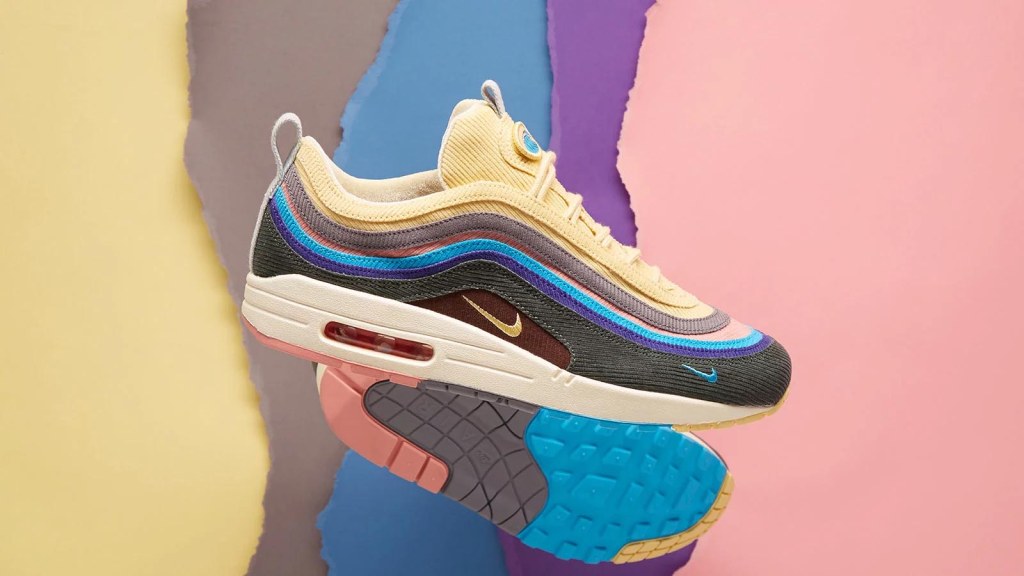
With the increasing popularity of e-commerce, online stores have become one of the mainstream channels that people fulfil their needs and want. A few taps on your mobile or tablet – everything is sorted. This phenomenon not only applies to daily purchases such as groceries or bus tickets, but also changes the nature of sneaker retailing.
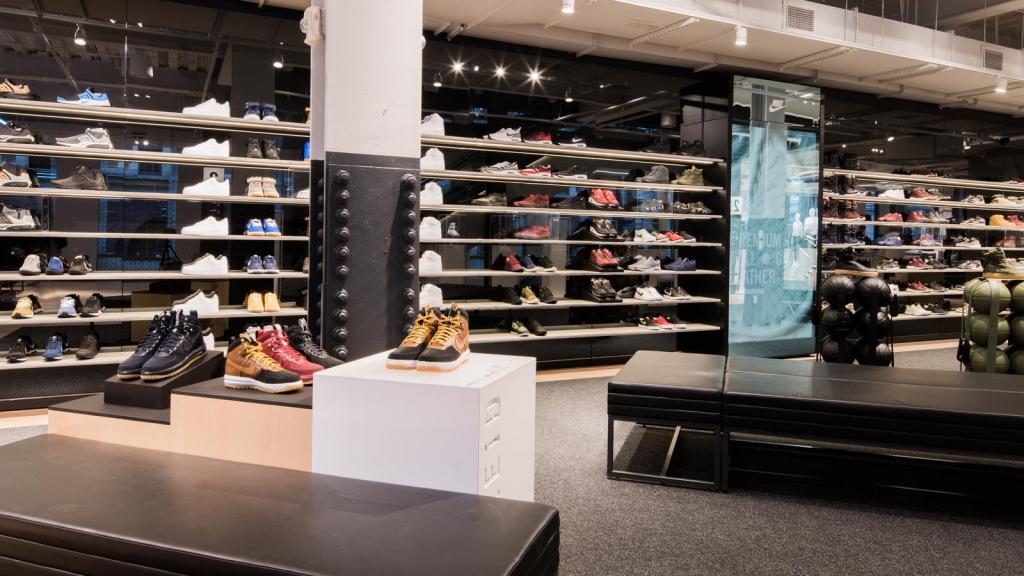
In the past decade, sneakers retailing have undergone significant changes. Traditionally, brick-and-mortar stores or consignment shops are the only ways the retailers and consumers can interact and execute a transaction. With the evolution of the digital economy, a universal trend of online business opportunities for sneakers have been exploited. This trend has led the industry to an intensive growth with an estimated value of 73 billion GBP (Grand View Research, 2018).
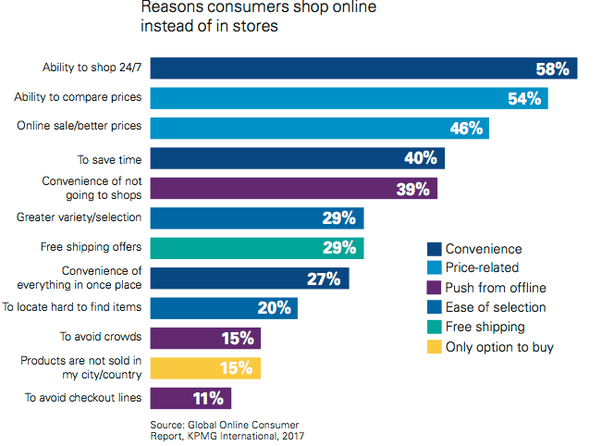
Why do consumers shop online?
Convenience has been the number one driving force behind the success of online retailing. With the increasing demand for convenience, Beauchamp and Ponder (2010) and Koo et al. (2008) investigated the crucial differences between online and offline customers. They identified four significant classifications that are instrumental to users’ online engagement, including information transparency, interactive design, payment method and after-sales service. Nowadays, people buy or sell sneakers online rather than traditional channels is primarily due to the less time and effort that need to be invested. Yet, a successful online store should be designed expertly with features that brick-and-mortar stores do not offer (Benitez, 2018).
StockX, one of the leading online marketplace for buying and selling sneakers, understand the changing environment of the sneaker industry. ‘Technologies has brought changes to how sneakers are being exchanged […] High-street stores must have a change, and this is when technologies come in handy’, Josh Luber, the founder of StockX said in an interview (The Hundreds, 2019). By executing their enduring vision of the sneaker culture trend, Josh established a simple and user-friendly online platform that connects buyers and sellers. The platform dragged a majority of traditional consignment stores consumers with its convenient functionalities such as fast shipment and quick payment methods.
Enhanced reality
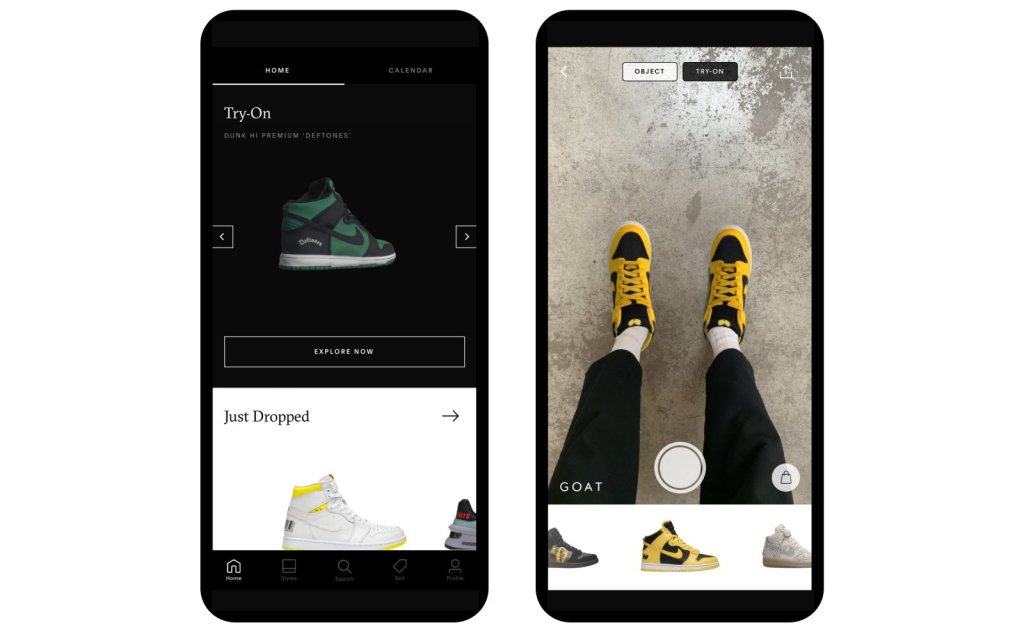
While online shopping carries numerous advantages, there has historically been one downside: consumers cannot feel the actual product or view it on feet. Retailers are starting to utilise technology to make visualisation possible, and Augmented Reality (AR) is the one.
GOAT, another leading online retailer in the sneaker industry, has been experimenting heavily with AR for a few years. The company recently introduced an AR feature for its current users and potential customers to experience any existing sneakers in real-life AR. The feature is relatively simple to use: You open the app, the camera will pop up, and it automatically scans your feet. Once the camera recognised your size and surroundings, you can choose any sneakers and view them on your feet. The AR feature is undeniably new changed how traditional sneaker used to be. With AR, consumers can virtually try on a pair of sneakers without visiting a store.
Learn about shoppers
In-store associates often offer product recommendations and personalised guidance to help sneaker shoppers to satisfy their needs and requests. However, this is not always the case, as each individual are different and misleading advice could be made.
As digital technologies and machine learning become more sophisticated, many retailers have begun leveraging artificial intelligence (AI) to offer smart product recommendations through their online stores. Nike is the first sneaker retailer to jump on AI. The leading brand acquired Celect, a predictive analytics company in 2019 and integrated AI technologies into their online store and application. The AI feature, allowed Nike to strengthen up their predictive analytics capabilities and provided useful insights to analysis the cost and benefits of arranging their inventory. It also enabled Nike to meet consumer demands easier with products recommendations. AI is undeniably changing the way sneakers to be sold to customers and potentially eliminating physical stores.
The future
In hindsight, it seems inevitable that the future of sneaker retailing will become progressively executed through online channels as both suppliers and customers demand the benefits brought by technology. Consumers are not only looking for the best deals in the current market, but also the flexibility, availability and any additional added-value which brick-and-mortar stores do not offer. At the same time, retailers seek ways to reduce time and effort to establish, market and distribute their offerings to end-consumers with the support of technologies.
As the sneaker industry continues to grow, it is expected to see traditional retail and consignment stores close down to save costs, and replaced by an arising amount of online stores or platforms. Employees will be required to be more skilled in areas such as website design and cybersecurity as these factors must be monitored closely and continuously enhanced to cope with the changing environment. Greater knowledge of management and marketing will also be necessary as competition will become steeper when the internet is flooded with similar business models. Retailers must keep up with the latest trends in e-commerce, including both frontend conversion optimising experiences and backend efficiencies as they are paramount to growing in the online sneaker retail landscape. The biggest concern holding back retailers is not the availability of technologies, but instead the inability to understand consumer behaviour and adapt to the changing environment.
References
- Beauchamp, M.B. & Ponder, N. (2010), “Perceptions of retail convenience for in-store and online shoppers”, The Marketing Management Journal, Vol. 20 No. 1, pp. 49-65.
- Benitez, C. (2018). How to Make Money Reselling Shoes: What You Need to Know to Get Started – Niche Pursuits. Niche Pursuits. Retrieved 13 February 2020, from https://www.nichepursuits.com/reselling-shoes/
- Athletic Footwear Market Worth $95.14 Billion By 2025 | CAGR: 5.1%. (2018). Retrieved 13 February 2020, from https://www.grandviewresearch.com/press-release/global-athletic-footwear-market
- Koo, D., Kim, J., & Lee, S. (2008). Personal values as underlying motives of shopping online. Asia Pacific Journal Of Marketing And Logistics, 20(2), 156-173. doi: 10.1108/13555850810864533
- The Hundreds (2019). How I Got Here Josh Luber Of Stockx. Retrieved 13 February 2020, from https://thehundreds.uk/blogs/content/how-i-got-here-josh-luber-of-stockx?country=GB
Word Count: 850
 Michael's Personal Blog