“ Reflection is one of the most underused yet powerful tools for success.” Richard Carlson
It has finally come to an end, and I am very thankful to have chosen this spectacular module for my year of study. The structure of the programme was smooth, and the overall content is rich and educative. Through this opportunity, I would like to highlight my learning experience throughout the course and reflect on specific themes which inspired and enlightened me the most.
The beginning of the module caught me off-guard as I was not familiar with online learning. The FutureLearn MOOC platform and WordPress are something new to me, and I never expect it to be such powerful learning tools. However, as soon as the issues got sorted, I realised the teaching method is exceptionally suitable for me compared to traditional learning, as I can thoroughly observe the knowledge without in-class or time pressure. I appreciate MOOC as it offers a wide range of media and interactive tools to interact with fellow learners and supported by educators. Besides, the platform brought together learners with diverse ethnicity and educational background, which enabled me to develop a diversified mindset and expand my knowledge unbiasedly.
Interacting, sharing, observing, learning.
My favourite part of the course is where we have the opportunity to comment on fellow classmates’ work and interact with them. Reading other’s blogs enabled me to gain rich insights and knowledge in topics that I had never studied before or even thought would be so crucial in the business environment nowadays. The two major themes discussed were digital disruption and digitalisation.
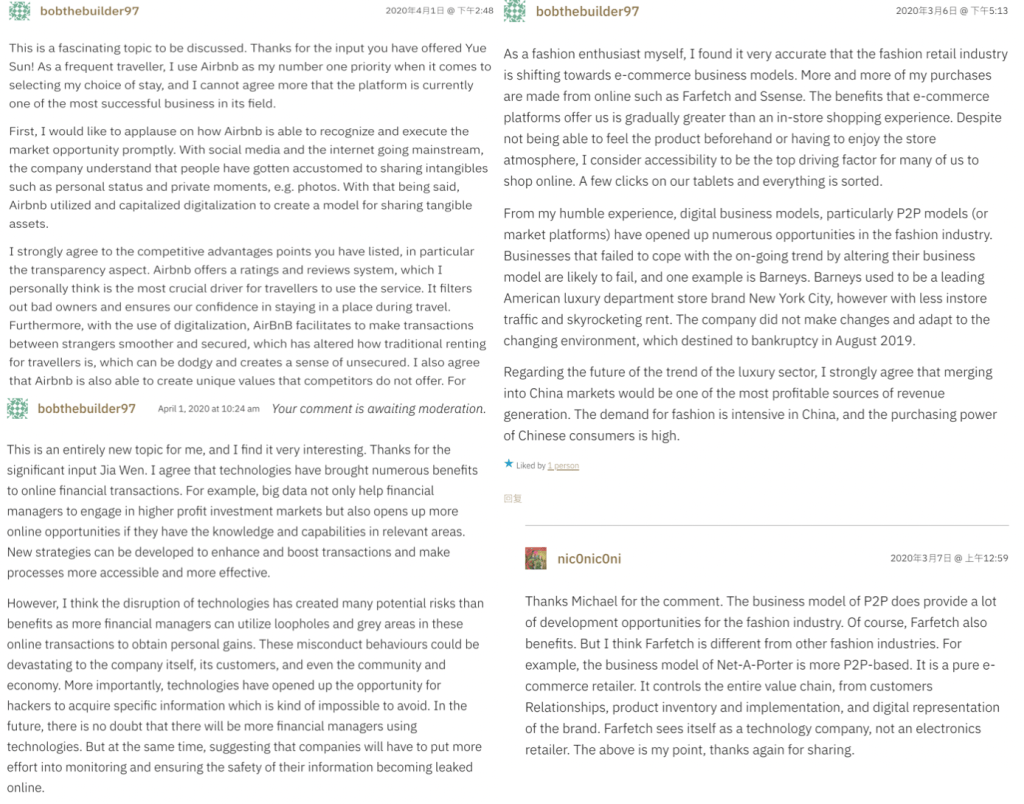
Jia Wen raised the concern over technology, enabling misconduct behaviour and unethical activities by financial managers which I strongly agree to his stance. With digitalisation, many managers and hackers are capitalising on loopholes to obtain personal benefits, which raises risks for owners and their customers. Jia Wen’s blog enabled me to thoroughly rethink on whether technology advancement is promising in the future, we both concluded that proper solutions should be made consistently to cope with the on-going changes in the technological habitat.
Nico and I had a great conversation over the impact of digitalisation on the fashion industry. We both agreed that the P2P business model provided numerous development opportunities for fashion retailers, such as to attract a significant number of audiences and offer an effective distribution channel. Regarding the post by Sun Yue on Airbnb, her input allowed me to reflect on the importance of sharing economy in the business world. A digital business utilising the share of un-used assets have proven to be significantly crucial in developing long-term success, which is vital to consider for business owners.
Figure 2: My interactions and comments on fellow student’s blogs
Small plans, Big future.
My journey throughout the module has been educative and thought-provoking. The knowledge I have gained will contribute to my future entrepreneurial career. The video below demonstrates my future plans. Enjoy!
“The traditional way of doing business is slowly dying.”
Today, digitisation and its expeditious development are creating new products and services, changing consumer behaviour, and more importantly, disrupting traditional markets (Lopez, 2014). An increasing number of start-ups and incumbent companies are altering their business model to capture this digital reality, aiming to create new business opportunities and to establish longer-term relationships with consumers. In general, digitalisation is disrupting not only existing industries but at the same time creating new, novel markets that were not exploited previously. One of many is the emergence of a secondary market or so-called ‘resale market’ for trainers and collectables, which is estimated to value at $5 billion by 2025 (Financial Times, 2018).
StockX, founded and launched in 2016, is currently the world’s leading digital marketplace platform specialising in buying and selling limited-edition trainers, streetwear garments, opulence handbags and rare timepieces (StockX, 2020). Since its inception, the business secured multiple rounds of financial funding. In 2017, 6$ million worth of support was funded by co-founder Dan Gilbert, prominent investors such as Battery Ventures and GV, followed by celebrities Joe Haden and Eminem. After receiving a $44 million funding in 2018, StockX was granted the honour of the fastest-growing start-up companies in the state of Michigan. Today, the thriving business is officially valued at $1 billion after the funding round in June 2019 by promising investment ventures such as DST Global and GGC Capital (Clifford, 2019). StockX currently handles more than $120 million worth of inventories every month and attains an average of nine million monthly unique users. Over 900 employees are in action to serve the proliferate demand for trainers and collectables across the globe (Debter, 2019).
In four short years, StockX has gone from an inconspicuous bookmark on a sneaker enthusiast’s browser to be one of the most influential businesses in the industry. Besides, how did it find success? Well, thanks to digitalisation.
The business model
Back then, a sneaker enthusiast who wanted to offload or take possession of a particular coveted pair of trainers had limited options. Online channels for such activities were out-dated, unsafe, inaccessible and, more critically, easy for scammers to manipulate. E-commerce pioneer, eBay has also been repeatedly accused of failing to hinder fraud, protect user data and prevent the infiltration of counterfeit items (Murray, 2019). StockX was able to recognise the issues and exploit the opportunity to fill in the missing gap between buyers and sellers.
The company capitalised a peer-to-peer (P2P), or two-sided business model as a solution to the missing links. As defined by Omarini (2014), a peer-to-peer platform often refers to the chicken or the egg dilemma, which indicate interactions between the provider and supplier are necessary to function an online marketplace. StockX acts as an intermediary to facilitate interactions between buyers and sellers via a bid/ask placing system. When the two side matches, sellers will ship the item to one of StockX’s facilities, and the goods will be inspected and deciphered by a professional for its authenticity (StockX, 2020). Once the item is deemed to be genuine, it will be sent to the buyer and payment will be released to the seller. A commission fee depending on the category of the item sold will be charged as compensation for the authentication service.
StockX’s choice of the business model has enabled the company to achieve recent success by placing customers at the centre of their business. The company leveraged technologies to deliver unique value propositions in which its competitors are unable to comply with (Osterwalder & Pigneur, 2010).
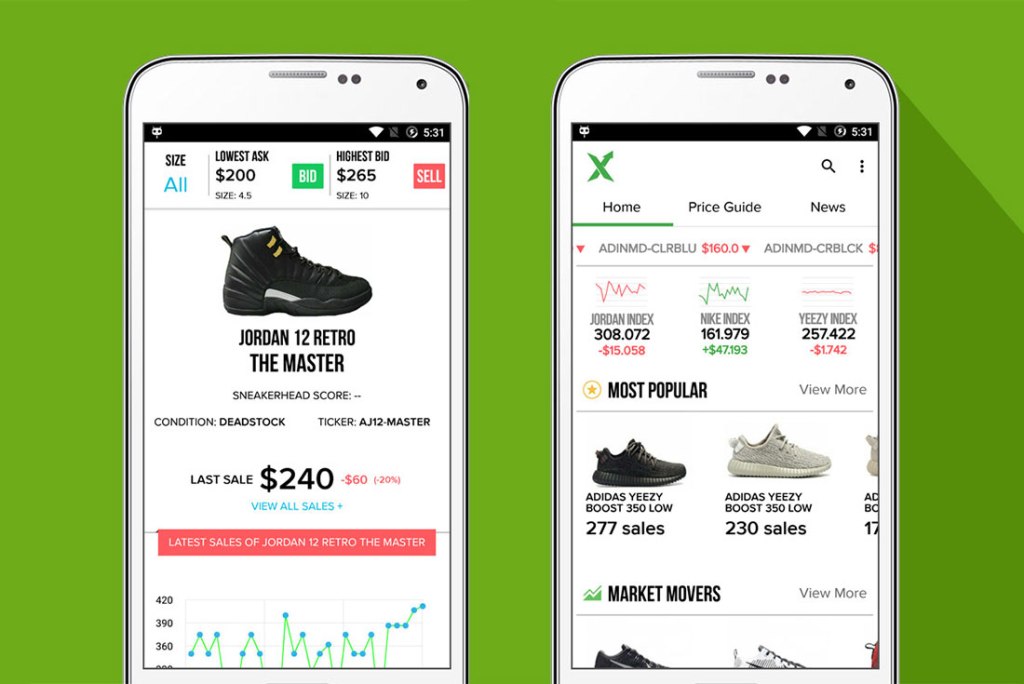
One and perhaps the most significant value that had made StockX one of the most trusted sources for reselling is transparency. “The answer to what any single thing is worth is what one single person is willing to pay,” Josh Luber, the former CEO expressed (The Hundreds, 2019). While competitors such as GOAT and Grailed are similar reselling platforms, StockX’s unique digital model has enabled the platform to differentiates itself by tracking successful sales and offering a vast amount of accessible data to help depict what people are paying and selling for in the secondary market (Seppala, 2018). Thereby, they deliver a thorough representation of the current and historical market data for all trainers and collectables, enabling users to identify trends, trade ranges and price volatility within the market.
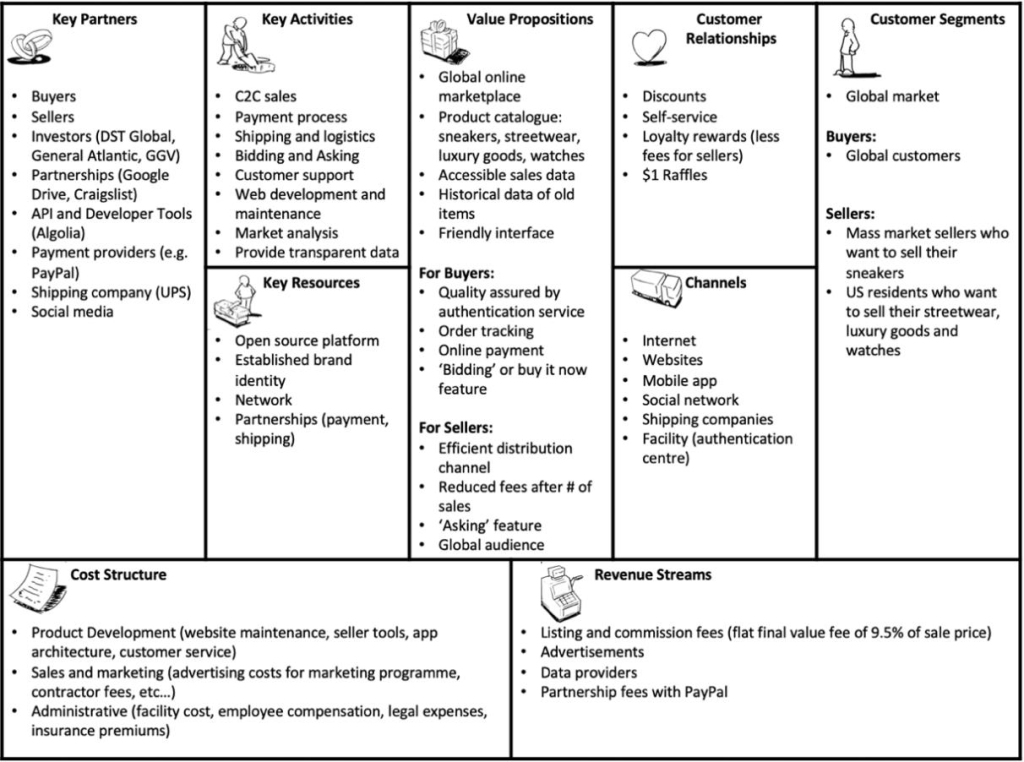
Figure 2: StockX Business Model Canvas
In hindsight, StockX leveraged its digital business model to create value, higher revenue, and opportunities for further expansion. The business provided a robust solution in light of the lack of accessibility, safety and transparency in the reselling industry. Its differentiation capabilities have resulted in the cannibalisation of the market share of incumbent competitors and made it practically impossible for new entrants to seize any opportunities in the monopolised market.
Omarini, E. (2018). Peer-to-Peer Lending: Business Model Analysis and the Platform Dilemma. International Journal of Finance, Economics and Trade. 31-41. 10.19070/2643-038X-180005.
Osterwalder, A. & Pigneur, Y. (2010). Business Model Generation: A handbook for Visionaries, Game Changers, and Challengers. New Jersey: Wiley.
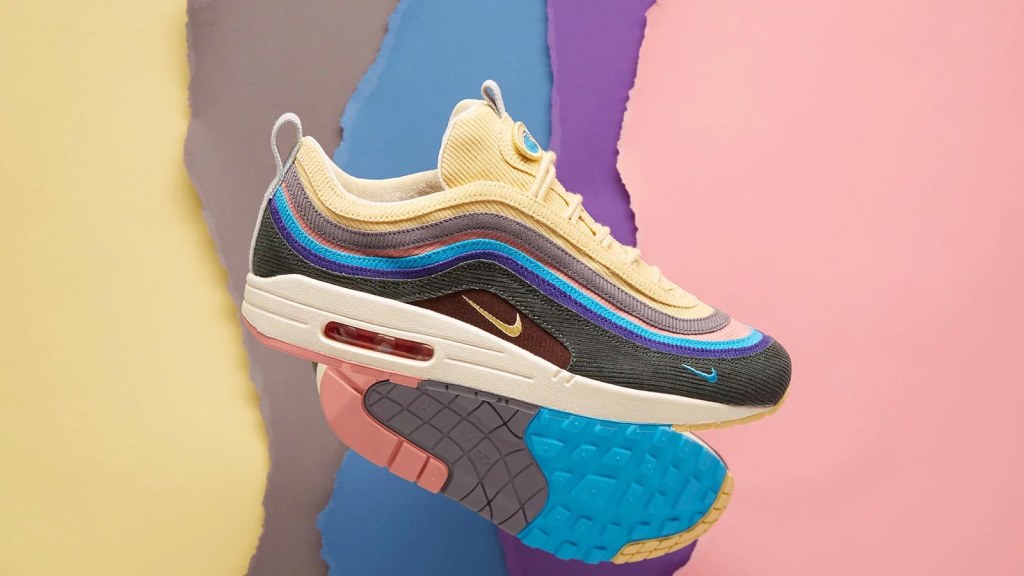
With the increasing popularity of e-commerce, online stores have become one of the mainstream channels that people fulfil their needs and want. A few taps on your mobile or tablet – everything is sorted. This phenomenon not only applies to daily purchases such as groceries or bus tickets, but also changes the nature of sneaker retailing.
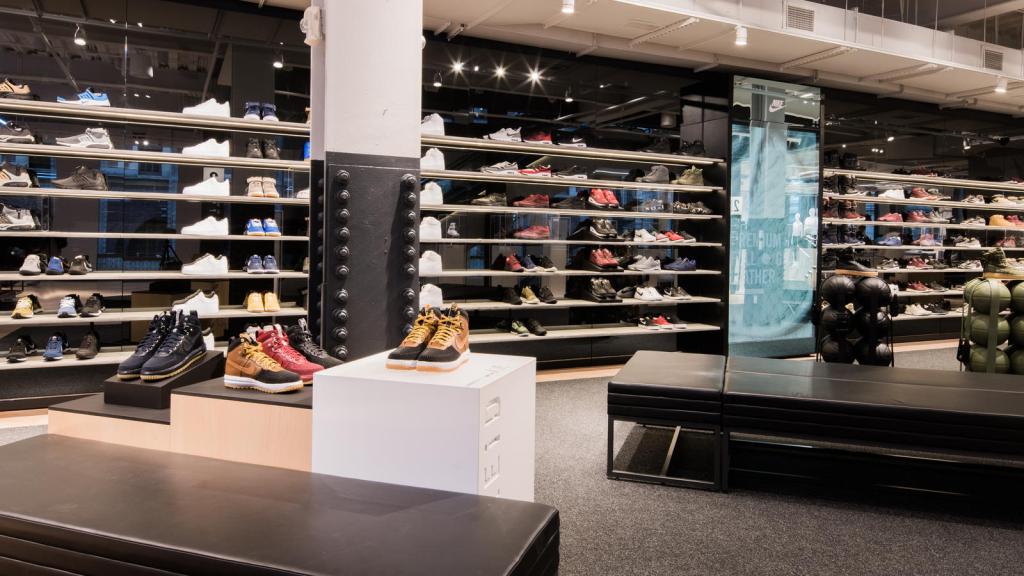
In the past decade, sneakers retailing have undergone significant changes. Traditionally, brick-and-mortar stores or consignment shops are the only ways the retailers and consumers can interact and execute a transaction. With the evolution of the digital economy, a universal trend of online business opportunities for sneakers have been exploited. This trend has led the industry to an intensive growth with an estimated value of 73 billion GBP (Grand View Research, 2018).
Figure 1: Nike Store in Soho
Why do consumers shop online?
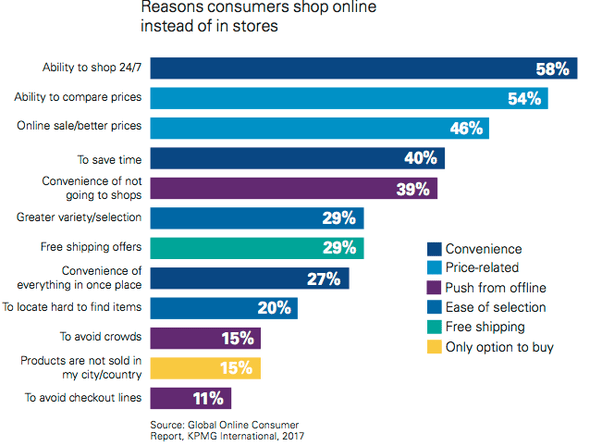
Convenience has been the number one driving force behind the success of online retailing. With the increasing demand for convenience, Beauchamp and Ponder (2010) and Koo et al. (2008) investigated the crucial differences between online and offline customers. They identified four significant classifications that are instrumental to users’ online engagement, including information transparency, interactive design, payment method and after-sales service. Nowadays, people buy or sell sneakers online rather than traditional channels is primarily due to the less time and effort that need to be invested. Yet, a successful online store should be designed expertly with features that brick-and-mortar stores do not offer (Benitez, 2018).
StockX, one of the leading online marketplace for buying and selling sneakers, understand the changing environment of the sneaker industry. ‘Technologies has brought changes to how sneakers are being exchanged […] High-street stores must have a change, and this is when technologies come in handy’, Josh Luber, the founder of StockX said in an interview (The Hundreds, 2019). By executing their enduring vision of the sneaker culture trend, Josh established a simple and user-friendly online platform that connects buyers and sellers. The platform dragged a majority of traditional consignment stores consumers with its convenient functionalities such as fast shipment and quick payment methods.
Figure 2: Reasons consumer shop online instead of in-stores Reprinted from: Global Online Consumer Report, KPMG (2017)
Enhanced reality
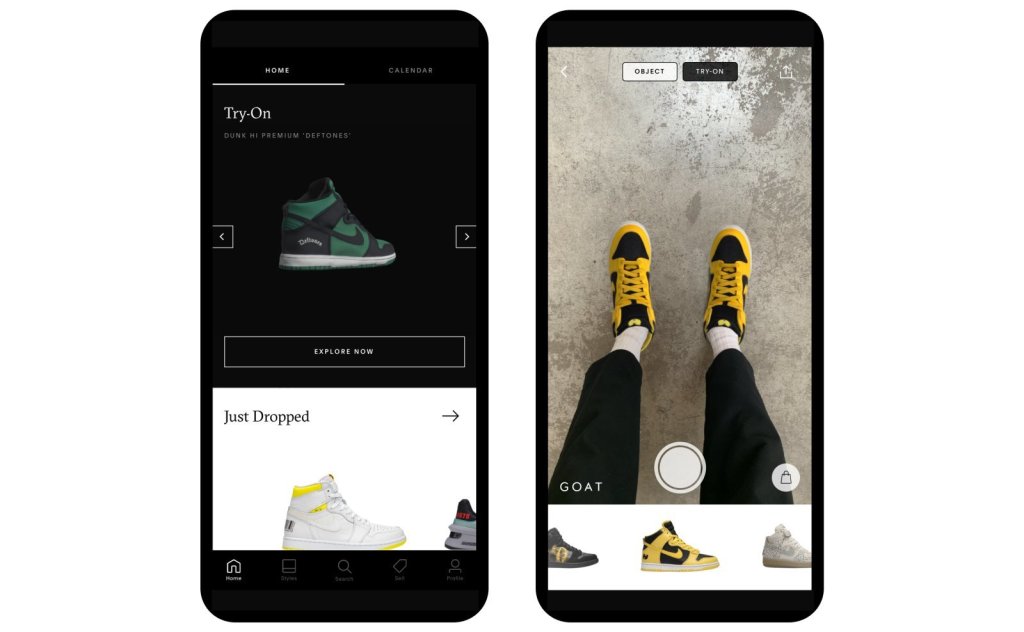
While online shopping carries numerous advantages, there has historically been one downside: consumers cannot feel the actual product or view it on feet. Retailers are starting to utilise technology to make visualisation possible, and Augmented Reality (AR) is the one.
GOAT, another leading online retailer in the sneaker industry, has been experimenting heavily with AR for a few years. The company recently introduced an AR feature for its current users and potential customers to experience any existing sneakers in real-life AR. The feature is relatively simple to use: You open the app, the camera will pop up, and it automatically scans your feet. Once the camera recognised your size and surroundings, you can choose any sneakers and view them on your feet. The AR feature is undeniably new changed how traditional sneaker used to be. With AR, consumers can virtually try on a pair of sneakers without visiting a store.
In-store associates often offer product recommendations and personalised guidance to help sneaker shoppers to satisfy their needs and requests. However, this is not always the case, as each individual are different and misleading advice could be made.
As digital technologies and machine learning become more sophisticated, many retailers have begun leveraging artificial intelligence (AI) to offer smart product recommendations through their online stores. Nike is the first sneaker retailer to jump on AI. The leading brand acquired Celect, a predictive analytics company in 2019 and integrated AI technologies into their online store and application. The AI feature, allowed Nike to strengthen up their predictive analytics capabilities and provided useful insights to analysis the cost and benefits of arranging their inventory. It also enabled Nike to meet consumer demands easier with products recommendations. AI is undeniably changing the way sneakers to be sold to customers and potentially eliminating physical stores.
The future
In hindsight, it seems inevitable that the future of sneaker retailing will become progressively executed through online channels as both suppliers and customers demand the benefits brought by technology. Consumers are not only looking for the best deals in the current market, but also the flexibility, availability and any additional added-value which brick-and-mortar stores do not offer. At the same time, retailers seek ways to reduce time and effort to establish, market and distribute their offerings to end-consumers with the support of technologies.
As the sneaker industry continues to grow, it is expected to see traditional retail and consignment stores close down to save costs, and replaced by an arising amount of online stores or platforms. Employees will be required to be more skilled in areas such as website design and cybersecurity as these factors must be monitored closely and continuously enhanced to cope with the changing environment. Greater knowledge of management and marketing will also be necessary as competition will become steeper when the internet is flooded with similar business models. Retailers must keep up with the latest trends in e-commerce, including both frontend conversion optimising experiences and backend efficiencies as they are paramount to growing in the online sneaker retail landscape. The biggest concern holding back retailers is not the availability of technologies, but instead the inability to understand consumer behaviour and adapt to the changing environment.
References
Beauchamp, M.B. & Ponder, N. (2010), “Perceptions of retail convenience for in-store and online shoppers”, The Marketing Management Journal, Vol. 20 No. 1, pp. 49-65.
Benitez, C. (2018). How to Make Money Reselling Shoes: What You Need to Know to GetStarted – Niche Pursuits. Niche Pursuits. Retrieved 13 February 2020, from https://www.nichepursuits.com/reselling-shoes/
Koo, D., Kim, J., & Lee, S. (2008). Personal values as underlying motives of shopping online. Asia Pacific Journal Of Marketing And Logistics, 20(2), 156-173. doi: 10.1108/13555850810864533
Hi all! I am Chu Tsun Ming Michael from Hong Kong and it is a pleasure to have you here.
I am currently an MSc International Business student studying at the University of Exeter. Before joining this amazing community, I studied BBA at the University of Kent and recently graduated from the University of Bath as an MSc Entrepreneurship & Management student.
The reason I have chosen Digital Business as one my of main modules is because I believe that technologies are fundamental in shaping the current business environment. Without the support of advanced technologies, any business is likely to survive nowadays. I hope this module will broaden my horizon on this field and offer me advices for my future career.
Here are some photos of myself and the places I have stayed. Enjoy!
University of Bath, Bath, United KingdomGraduation at University of Bath, Bath, United Kingdom